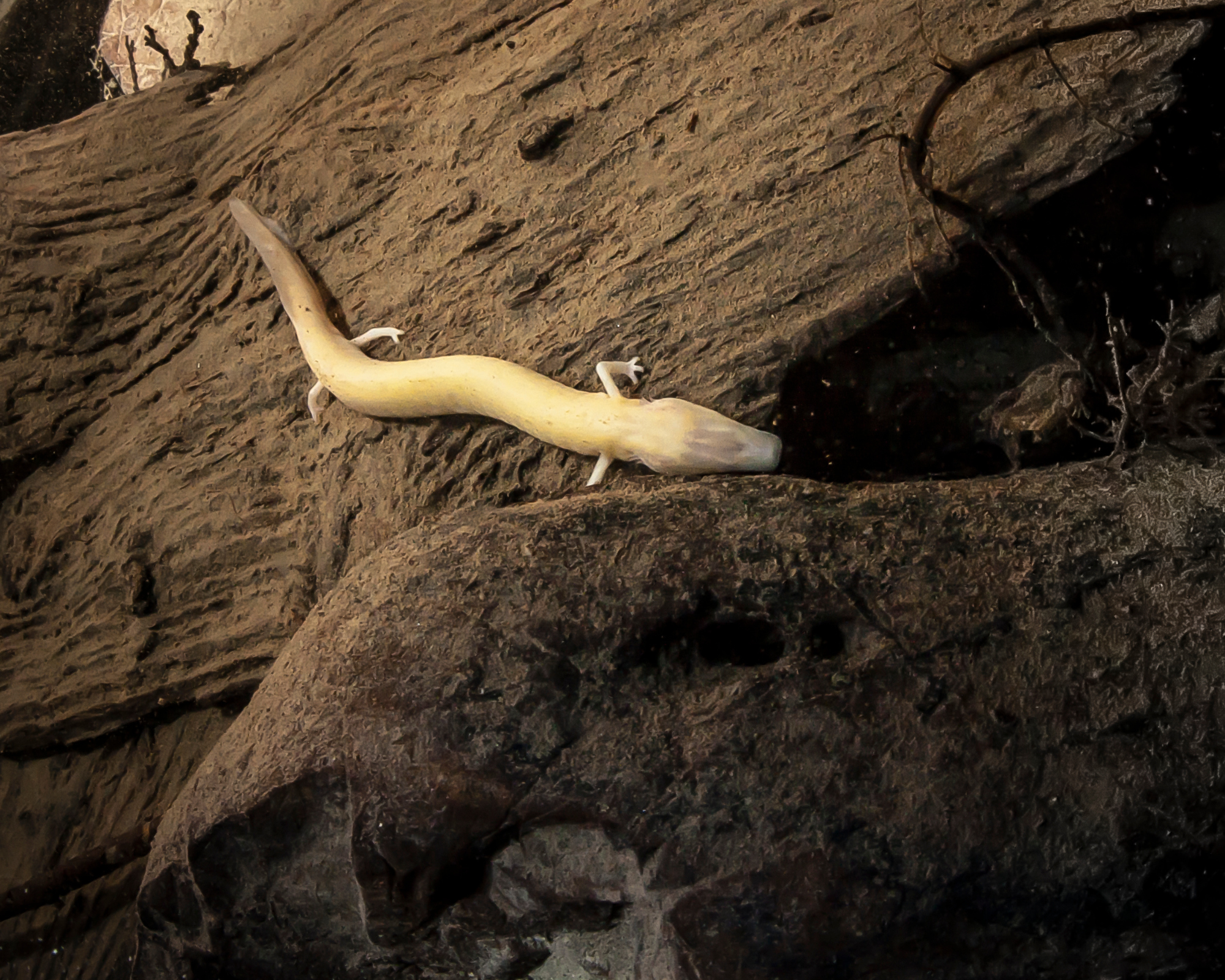
How to conserve energy in a resource-poor habitat?
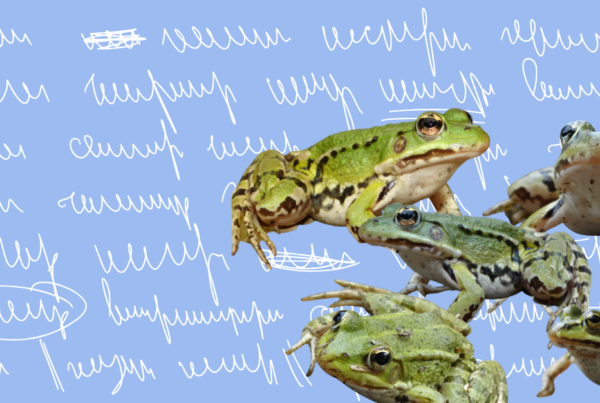
The olm (Proteus anguinus) feeds on various subterranean invertebrates, such as crustaceans, molluscs, cave insect larvae, the karst cave shrimp (Troglocaris anophthalmus), tadpoles of the common frog (Rana temporaria), the common earthworm (Lumbricus terrestris) and the Eurasian minnow (Phoxinus phoxinus). In its unique habitats, about which we wrote in more detail in Elusive inhabitant of the Dinaric karst - Part 2, prey is extremely scarce. Because of this, it is not enough just to find and catch prey efficiently, but it is also important to survive long periods without it.
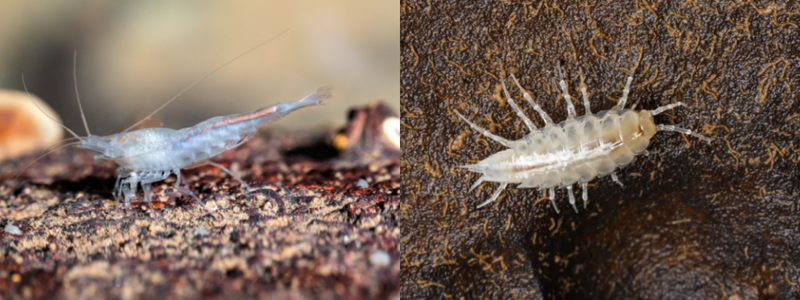
The olm has developed an extraordinary resistance to starvation and can survive without food for between 18 and 96 months.
In experiments, scientists compared its resistance to starvation with that of the Pyrenean brook newt Euproctus asper. After 240 days without food, the olm showed no signs of starvation, whereas E. asper did not survive for more than 90 days. This extraordinary ability can be partly explained by its very slow metabolism and reduced activity levels. Compared with most surface-dwelling amphibians, the olm uses significantly less energy, and its minimal resting oxygen consumption can be up to eight times lower. During prolonged food shortages, it can reduce energy expenditure and conserve its own proteins, alongside a further decrease in activity. When food becomes available again, it has the ability to recover quickly from starvation. [7, 10, 12]
In the olm, every movement is purposeful and economical in order to conserve precious energy. That is why territory plays an important role in its life.
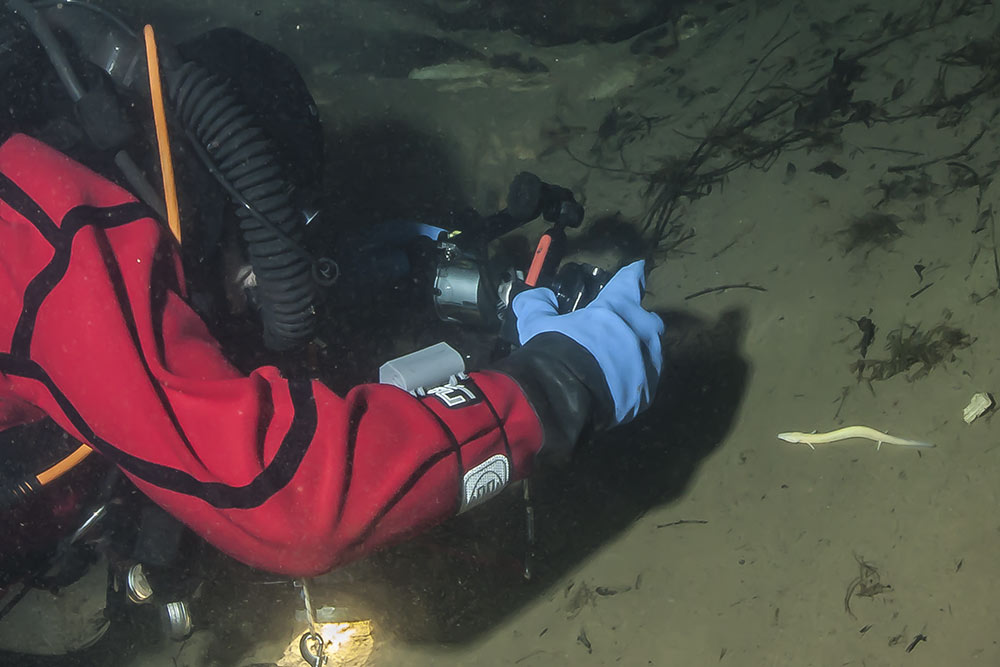
Knowing its own territory and habitat quality reduces the need to move and search for new food sources, which greatly conserves its energy. The olm is extremely territorial, and research has shown that individual specimens can remain in almost the same place for years. In one such study carried out in Bosnia and Herzegovina, scientists used the CMR method (capture–mark–recapture) to track the movement of individuals in Vruljak Cave. With this method, individuals are captured and marked, and recaptures are recorded during subsequent surveys. Nineteen adult olms were marked along a 270 m transect that was then surveyed over several years. Most individuals did not move more than 10 m during the study period, while the “most adventurous” one covered just 38 metres over 230 days. Unlike adults, younger individuals are thought to move more as they search for their ideal territory, from which they then do not stray far as adults. [2, 3, 4, 6, 10, 11, 14 ]
Slow life cycle and why it can be a problem?
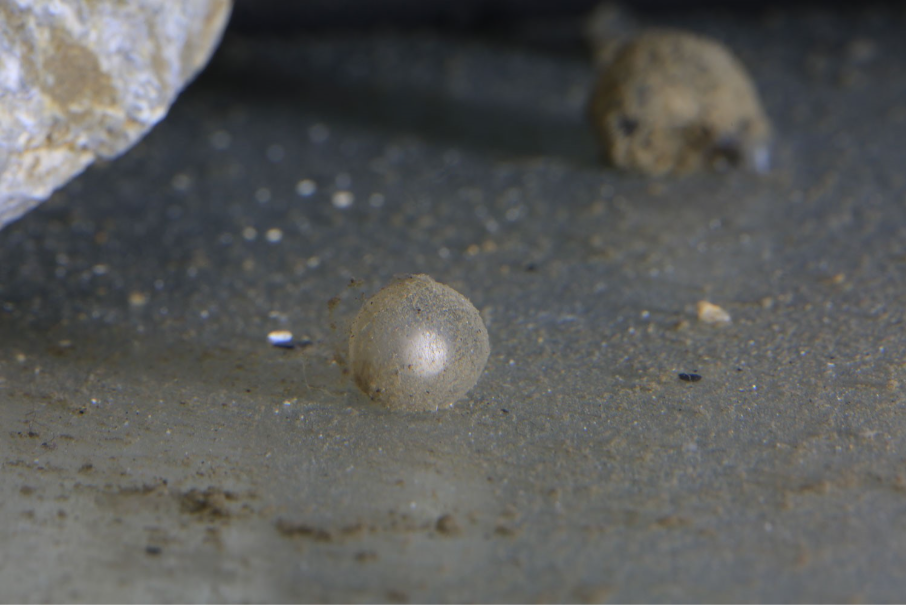
The olm can live for up to 100 years. For such a long life, certain conditions are important, such as predator-free habitats, favourable oxygen concentrations and a slow metabolism. However, a long lifespan is also accompanied by slow development, reaching sexual maturity late and a very slow reproductive cycle. The olm reaches sexual maturity only between 14 and 18 years of age, and can remain capable of reproducing even after 80 years of age. On average, it reproduces once every 12 years, and during this period it prefers colder temperatures, between 11 and 12 °C. At the very beginning of research into its life cycle, there were debates over whether the olm gives birth to live young (viviparity) or lays eggs (oviparity). One of several events that sparked this debate was the discovery of spermatophores1, which indicate internal fertilisation. A Polish zoologist also described the emergence of live young, and there are other accounts of live young emerging in Slovenia. However, after many breeding attempts and observations of egg-laying in captivity, scientists confirmed that oviparity is its only mode of reproduction. [1, 9, 13, 10, 15]
- Many newts and salamanders reproduce by the male depositing a spermatophore, a packet of sperm enclosed in a protective capsule, onto a substrate, which the female then picks up with her cloaca. ↩︎
A species that takes years to reach sexual maturity and reproduces at such long intervals requires stable habitat conditions. How strongly environmental conditions can affect its reproduction is also shown by the example of the Hermannshöhle site in Germany, where a biospeleological laboratory was established in 1931. Over 25 years, 20 olms originating from Postojna Cave were introduced into the cave lake. By 2015, nine individuals had survived: four males and five females. Yet for more than 80 years, no reproduction was recorded. Only after conditions in the lake were improved and shelter sites were built did reproduction begin, with the first egg spotted in early 2016. [5, 8, 10]
This example clearly shows how strongly changes in habitat conditions can affect the behaviour of the olm.
Although the olm is exceptionally well adapted to life underground, its specific life cycle makes it particularly sensitive to changes in its habitat.
When a species needs years to mature, along with specific and stable conditions for life and reproduction, a population cannot recover quickly after a decline in numbers. Populations are particularly threatened following the loss of a larger number of individuals. This can happen, for example, when an influx of large volumes of water into the subterranean environment flushes them out to the surface. Such “lost” individuals cannot be returned to their subterranean habitats, and one reason is that they can transmit surface pathogens to other individuals in the population, so if they are rescued in time, they need to be cared for in rehabilitation centres. Yet what happens to olms that are flushed out to the surface? What are the other reasons why they cannot be returned to their habitats? We will cover this, as well as all the ways such individuals can contribute to science and better protection of the species, in the next article.
Until the next read!
Header photograph author: Petra Kovač Konrad, Hyla Association archive

Written by Melina Tadić
Ciao, I’m Melina! I am currently finishing my Master’s degree in Nature Conservation at FAMNIT in Koper. During my studies, I focused mostly on the sea, while volunteering connected me with terrestrial species – which sparked my love for reptiles, amphibians and even birds. I currently volunteer with several associations, which has brought me invaluable experience and knowledge as well as broadened my horizons.
Literature
- Aljančič, G. i Aljančič, M. (1998) Človeška ribica (Proteus anguinus). Proteus 60 (2): 83-87.
- Balázs, G., Lewarne, B. i Herczeg, G. (2020). Extreme site fidelity of the olm (Proteus anguinus) revealed by a long‐term capture–mark–recapture study. Journal of Zoology, 311(2), 99-105.
- Delić, T., Zakšek, V., Trontelj, P. i Recknagel, H. (2023). Koliko zapravo poznajemo čovječju ribicu, simbol Dinarskog krša? Novosti u poznavanju taksonomije, biologije, biogeografije i ponašanja naše najpoznatije podzemne životinje. Subterranea Croatica, 21(2), 2-11.
- Durand, J. P. i Parzefall, J. (1987). Is the Development of the Rheotaxis in the Blind Cave Proteus? Traite de Zoologie 14(2): 515-524.
- Grosse, W.R, Ipsen, A., Guillaume, O. i Aljančić, G. (2018). Proteus anguinus Laurenti, 1768 – Cave salamander. In Threatened newts and salamanders – captive care management , Vol 2 (W.R.Grosse i sur., ur.) Deutsche Gesellschaft fur Herpetologie und Terrarienkunde, Mannhaim, Germany. Mertensiella 28: 148-199.
- Guillaume, O. (2000). Role of chemical communication and behavioural interactions among conspecifics in the choice of shelters by the cave-dwelling salamander Proteus anguinus (Caudata, Proteidae). Canadian Journal of Zoology, 78(2), 167-173.
- Hervant, F., Mathieu, J. i Durand, J. (2001). Behavioural, physiological and metabolic responses to long-term starvation and refeeding in a blind cave-dwelling (Proteus anguinus) and a surface-dwelling (Euproctus asper) salamander. Journal of Experimental Biology, 204(2), 269-281.
- Ipsen, A. i Knolle, F. (2017). The olm of Hermann’s Cave, Harz Mountains, Germany–eggs laid after more than 80 years. Natura Sloveniae, 19(1), 51-52.
- Juberthie, C., Durand, J., i Dupuy, M. (1996). La reproduction des Protées (Proteus anguinus): bilan de 35 ans d’élevage dans les grottes-laboratoires de Moulis et d’Aulignac. Mémoires de biospéologie, 23, 53-56.
- Koller Šarić, K., Jelić, D., Kovač Konrad, P., Jalžić, B., Aljančič, G., Sremac, J., Karaica, B., Bedek, J., Lukić, M., Lukač, M., Lewarne, B., Balázs, G., Holtze, S., Legović, S., Božić, V., Bressi, N., Cizelj, I., Sket, B., Budić, M., Rnjak, G., Herczeg, G., Braude, S., Göritz, F., Hermes, R., Hildebrandt, T. B., Mutschmann, F., Szentiks, C. A., Jalžić, V., Buzjak, N., Basara, D., Cvitanović, H., Ćukušić, I. i Polić, G. (2019): PROTEUS. Udruga HYLA, Zagreb.
- Roth, A. i Schlegel, P. (1988). Behavioral evidence and supporting electrophysiological observations for electroreception in the blind cave salamander, Proteus anguinus (Urodela). Brain, behavior and evolution, 32(5), 277-280.
- Schreiber, E. (1912). Herpetologia Europaea: eine systematische Bearbeitung der Amphibien und Reptilien welche bisher in Europa aufgefunden sind. G. Fischer.
- Sket, B. (2007). Kaj vemo in kaj si mislimo o človeški ribici: utrinki iz zgodovine in nekaj novosti.[What do we know and what do we think about proteus]. Proteus (Ljubljana), 70(1), 14-27.
- Uiblein, F. i Parzefall, J. (1993). Does the cave salamander Proteus anguinus detect mobile prey by mechanical cues. Mém. Biospéol, 20, 261-264.
- Voituron, Y., De Fraipont, M., Issartel, J., Guillaume, O. i Clobert, J. (2010). Extreme lifespan of the human fish (Proteus anguinus): a challenge for ageing mechanisms. Biology letters, 7(1), 105.