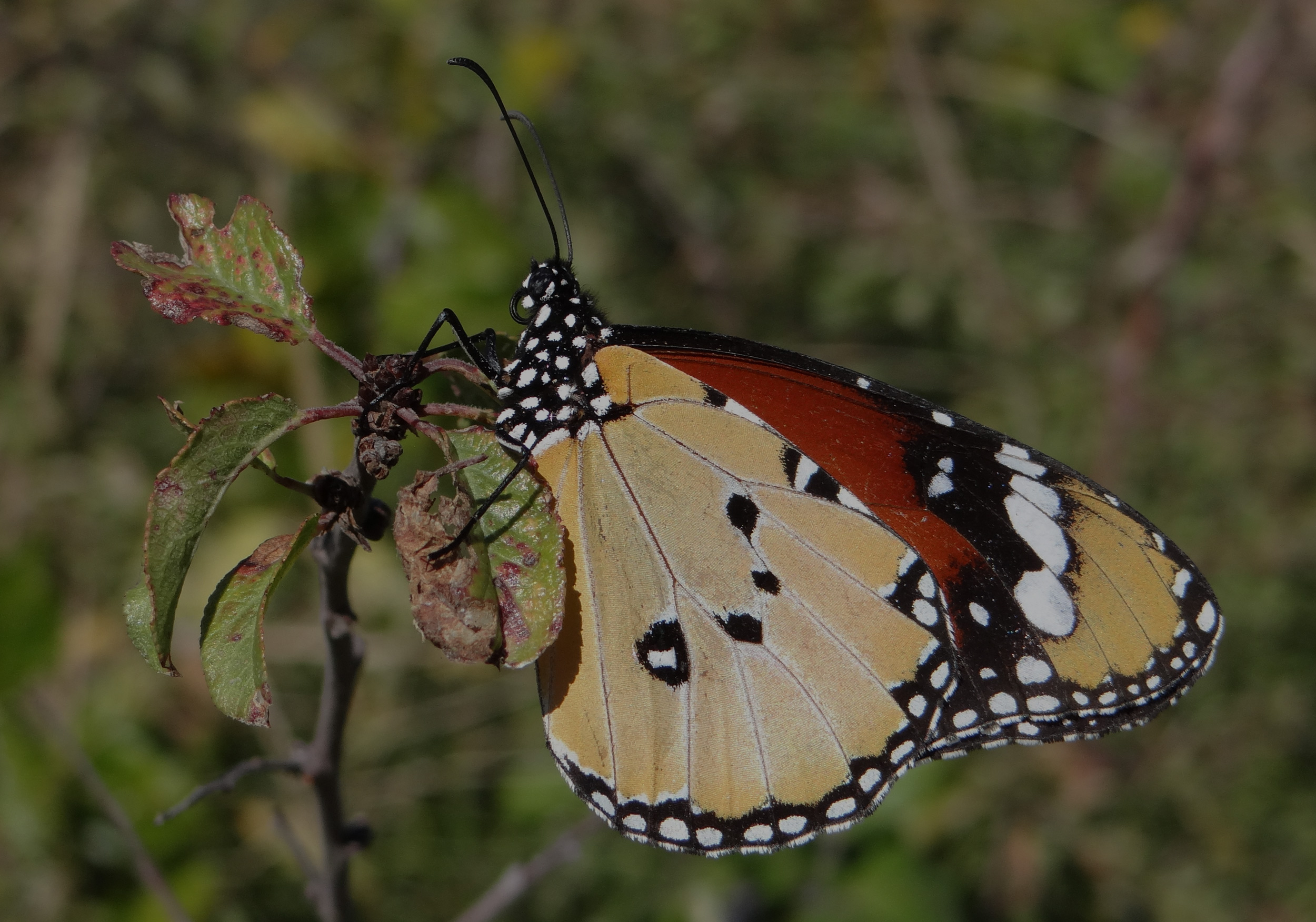
They can be found on every continent except Antarctica, ranging from sea level all the way to the peaks of high mountains. They inhabit diverse habitats such as grasslands, scrublands, forests, as well as agricultural and urban areas, the sole requirement being the presence of host plants for their caterpillars. From spring through to mid-autumn, adult butterflies and moths are all around us, and few people have not experienced an encounter with these fluttering creatures.
One of the oldest and best-known classifications of Lepidoptera divides them into butterflies and moths. In Croatia, 197 species of butterflies and more than 3,000 species of moths have been recorded. Butterflies are undoubtedly the group of insects that attracts the greatest interest, from experts as well as amateurs and nature enthusiasts alike. Hardly anyone can remain indifferent to the colours and patterns found on their wings.
Moths differ from butterflies primarily in their period of activity, the shape and type of their antennae, their stouter, hairier, more inconspicuous and less colourful bodies with cryptic coloration, and their wing patterns. However, not all moth species fly exclusively at night; there are also moths that are active during the day. Most of these are species with brightly coloured wings that warn predators of their toxicity. Moths are an extraordinarily diverse and numerous group, encompassing both the smallest and the largest living Lepidoptera. Like butterflies, moths visit flowers and feed on nectar, primarily at dusk or at night. Moth fauna is remarkably diverse: compared to butterflies, which account for only about 5% of all Lepidoptera, as many as 95% of species belong to moths.
Both butterflies and moths in Croatia have been researched since the early 19th century, though mostly unsystematically and within geographically limited areas. As a result, some parts of our country are very well researched, while others remain almost completely unexplored. Over the past twenty years or so, the number of butterfly species recorded in Croatia has increased by around ten, thanks to surveys of previously unexplored regions and new genetic research. Today, we can say that Croatia's butterfly fauna is generally well studied, yet there are still parts of the country for which almost no data exist.
While we already know a great deal about Croatia's butterfly fauna, we are only just beginning to explore and uncover its moth fauna. A high number of species, more demanding fieldwork, time-consuming processing of collected material, and a shortage of specialists are some of the reasons why this large and diverse group remains poorly known. Moths are vital bioindicators of environmental integrity and are significantly more effective in this role than butterflies.
In Croatia, one of the primary drivers of butterfly and moth decline is the abandonment of traditional land management practices, particularly the maintenance of hay meadows. When left unmanaged, these meadows begin to overgrow with coarse grasses and sedges, while other herbaceous plants — especially flowering species — gradually disappear. Occasionally, such habitats are ploughed up and rapidly colonised by invasive plant species, which generally outcompete native flora, including the larval host plants of caterpillars. In mountainous regions, coastal areas, islands, and several other parts of the country, the decline of traditional livestock grazing poses a major threat to the survival of Lepidoptera. Abandoned pastures quickly become encroached by scrub and, eventually, woodland. While some of these successional changes are long-term, others become noticeable within just a few years. Such changes are most effectively tracked by establishing butterfly transects or permanent monitoring plots for moths. Unfortunately, there is currently no systematic monitoring of butterfly population trends in Croatia, making historical comparisons and future projections impossible.
The current conservation status of Croatia's butterflies can be checked in the Red Book of Butterflies of Croatia, according to which as many as 27 out of 197 species fall into one of the threatened categories or are classified as Data Deficient. However, it should be noted that almost all of these threat assessments are outdated, and the conservation status of many rare and genuinely threatened species has never been assessed. For this reason, an urgent revision of the Red List of Butterflies of Croatia is needed.
Although national monitoring programmes and targeted tracking projects in selected areas have been established in Croatia in recent years, long-term historical data series are still lacking to enable more reliable comparisons with past conditions and more accurate long-term projections.
Experts at Association Hyla have been researching and conserving butterflies and moths over the past decade. Prompted by a lack of knowledge, literature, and specialists — particularly for Croatia's moths — we initiated intensive research and mapping of Croatia's Lepidoptera.
Our greatest contribution has been made to the knowledge of Croatia’s butterflies, including several species newly recorded for the Croatian fauna. Significant faunistic contributions have also been made to the understanding of the butterfly fauna across numerous parts of Croatia, such as the islands of Cres, Lošinj, Vir, Kornati, Čiovo, Hvar, Korčula, Šolta, Olib, and Šćedro, among others. For the first time, systematic mapping has been carried out in previously almost unexplored areas of Croatia, including Mounts Poštak, Troglav, Kamešnica, and Dinara, as well as the Zrmanja River valley. The butterfly fauna of continental Croatia remains largely understudied and poorly known, primarily due to a lack of recent systematic surveys. Nevertheless, for certain areas—such as Bansko Brdo in Baranja, the surroundings of Požega, and Vugrovec near Zagreb—we have, together with a large number of collaborators and colleagues, succeeded in highlighting the richness and importance of the local fauna.
Recently, we have been shifting our focus towards larger, systematic surveys of entire regions or counties in order to accelerate data collection and make butterfly data publicly accessible. Thus, over the past decade, together with our collaborators, we have been researching the Hrvatsko Zagorje region. Previously an almost unexplored area, following our research it can now be considered the best-studied region in Croatia.
Moths are a much more complex group that cannot be researched as a whole in the same way as butterflies. Over the past few years, we have been implementing numerous projects aimed at researching and assessing the moth fauna in areas such as the Bednja River valley, Hrvatsko Zagorje, and Žutica Forest. Although these are preliminary surveys, even they make a significant difference compared to previous knowledge. Furthermore, through our research, we have recorded around ten moth species new to Croatia's fauna, including the first record of the willow underwing (Arytrura musculus), a species listed in Annex II of the Habitats Directive. Through continued systematic research, we will expand our knowledge of Croatia's moths, with the long-term goal of compiling Red Lists of threatened moth species.