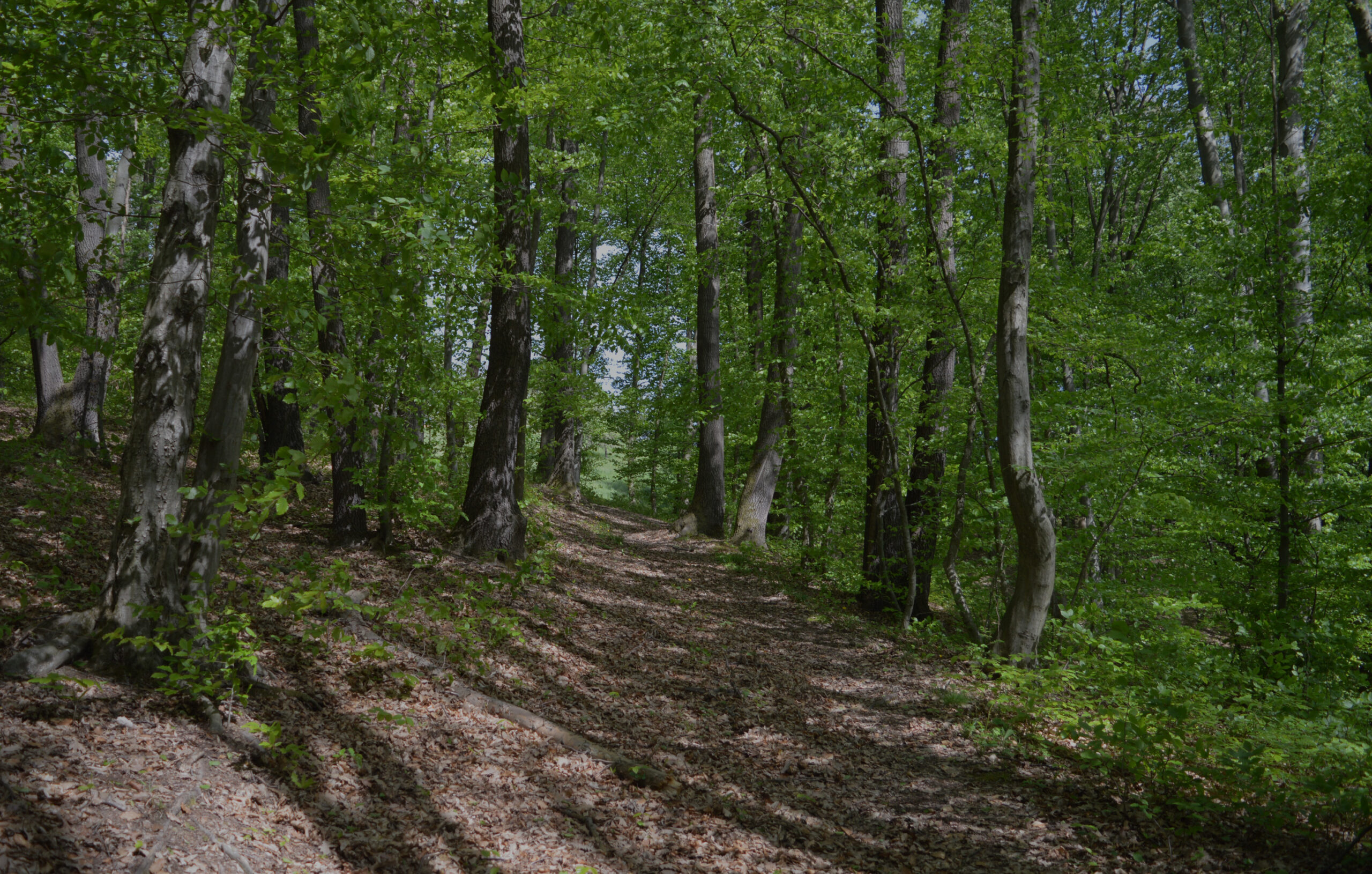
A forest ecosystem is a community of plants, animals, fungi, microbes, and all other organisms interacting with the chemical and physical features of their environment, in which trees are the dominant life form. Forests provide numerous ecosystem services: they bind the soil and buffer the effects of wind, thereby preventing soil erosion; they produce oxygen and absorb carbon dioxide, the primary driver of global warming; and they intercept precipitation, slowly releasing it into the soil, surface waters, and underground aquifers. The water vapour they release through transpiration influences the climate and forms a vital part of the hydrological cycle.
For centuries, people have shaped the European landscape by using and modifying the land through various traditional agricultural and forestry practices, as well as more recent urban development trends. As a result, mosaics of natural, semi-natural, managed, and artificial landscapes have emerged at the expense of biodiversity—most notably that of forests. The frequency, intensity, and timing of wildfires, windthrow, ice storms, droughts, and insect outbreaks are shifting as a consequence of human activities and climate change, rendering forest ecosystems increasingly vulnerable to the damaging effects of such events. Alongside the negative impacts of natural disturbances, human forest management leads to structural shifts in forest age, the loss of old-growth and veteran trees, and the disappearance of trees with various forms of damage and cavities, which are of the greatest importance for biodiversity.
Association Hyla conducts research on saproxylic beetles, which serve as key indicators of the conservation status of forest ecosystems. Given that this research is still in its early stages and there are currently no national-level plans for systematic surveys, we can only offer a subjective impression that Croatia’s forests are in good condition. Every year during our surveys, we record rare and threatened species of saproxylic beetles—some more than a century after their last known record, and others entirely new to the country. The presence of such species indicates a continuity of dead and dying trees, which are essential for sustaining all organisms dependent on this microhabitat. Naturally, some areas are better preserved than others that are more intensively managed and consequently support fewer specialised species. Through multi-year research, we hope to provide a scientifically grounded basis for the conservation of forest ecosystems in Croatia that are of the greatest importance for their associated biodiversity.