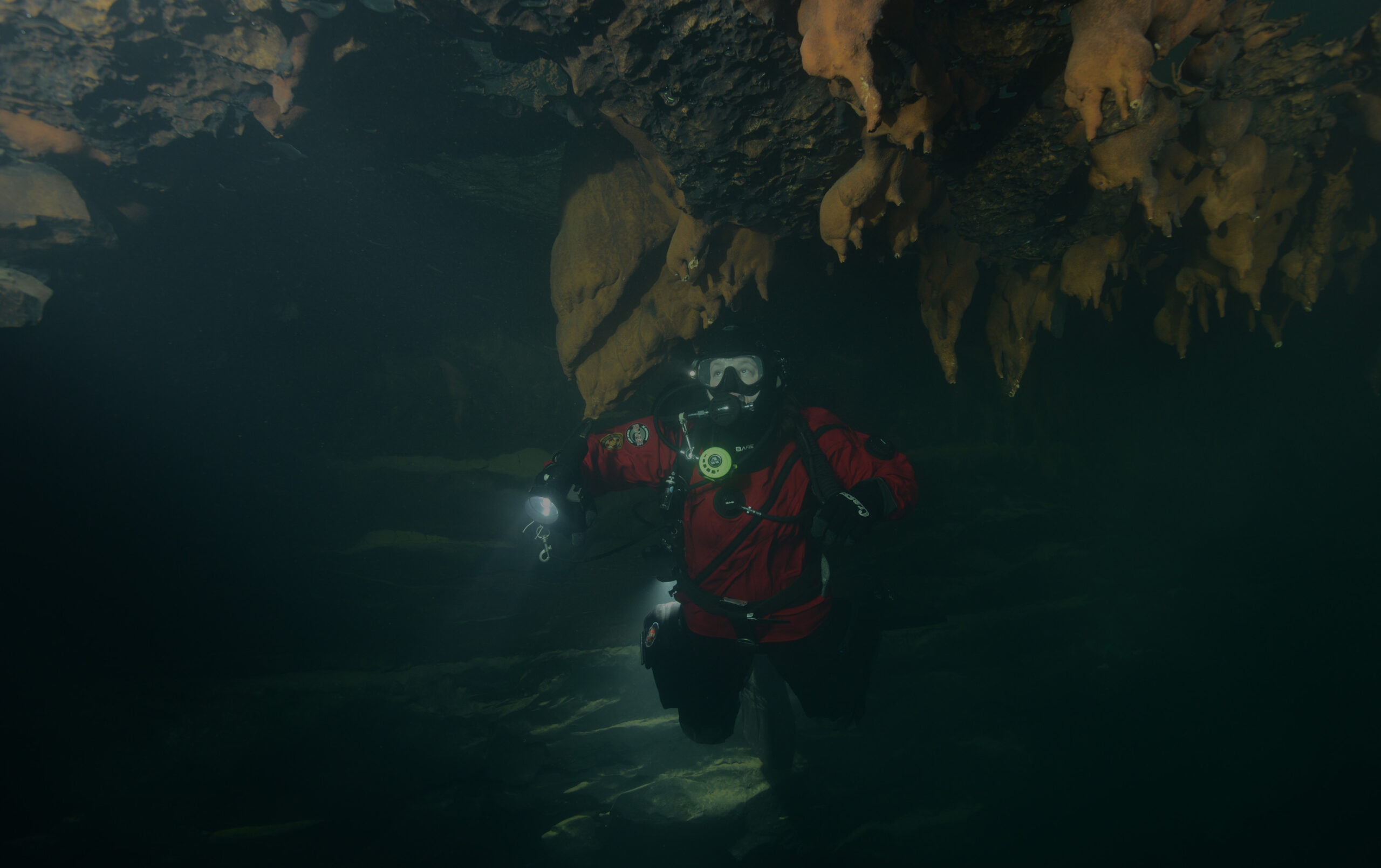
The underground habitats of the Dinaric karst rank among the richest and most diverse subterranean ecosystems in the world. Croatia’s underground abounds with diverse karst features—most notably caves and pits, as well as complex subterranean water systems and tiny spaces between rocks and sediments. They are home to an exceptionally rich and specialised fauna adapted to life in complete darkness, limited food availability, and stable environmental conditions. Thanks to its high number of underground species—particularly endemics found nowhere else in the world—Croatia is one of Europe’s most important hotspots of subterranean biodiversity.
Among the best-known inhabitants of Croatia’s underground is certainly the olm, an endemic of the Dinaric karst and one of the most iconic representatives of subterranean aquatic fauna. Despite their exceptional value, underground habitats are highly sensitive to environmental changes. Water pollution, improper waste and land management, agricultural activities, and construction works can seriously disrupt their balance. Because surface and subterranean karst ecosystems are closely linked, protecting them requires an integrated approach to conserving the karst landscape.
Association Hyla takes part in the research, conservation, and protection of underground habitats. Through projects researching and monitoring the olm, we have gained experience in speleological and cave-diving surveys and established collaboration with specialists from diverse disciplines. Part of our work focuses on conserving underground habitats by removing waste and other washed-in material from caves and pits. Working alongside cavers, cave divers, experts, and volunteers, we participate in clean-up actions as well as in preparing technical baseline documents for planning more complex remediation works. Alongside hands-on fieldwork, public education and awareness-raising on the value and vulnerability of the underground world form an important part of our activities.